Northline Builders

Homeowner questions

Construction Consulting

Northline offers construction consulting for homeowners, property owners and investors who want experienced eyes on a project without necessarily hiring us to build it. You don't have to hire Northline to build your project to have Northline on your side.

Homeowners are usually making the largest discretionary purchase of their lives while negotiating with people who do this professionally every day. A construction consultant closes that gap. You're hiring construction judgment rather than construction labor.

In practice, the work falls into a few areas. Before a project: assessing whether an idea is feasible, what it would realistically involve, and how to sequence it. During bidding: reading proposals, identifying gaps and exclusions, normalizing them so they're genuinely comparable, and helping you interpret what the differences mean.

Once a builder is selected: reviewing scope and contract terms so you understand what you're agreeing to, and clarifying anything ambiguous before it's signed rather than after it's disputed.

During construction: reviewing change orders, evaluating whether a discovered condition and its pricing are reasonable, and looking at work in progress when quality is in question.

And sometimes simply as a sounding board — someone to call when you're not sure whether what you're being told is normal. That's often the most valuable version of the engagement, and the hardest to describe in a proposal.

Northline offers construction consulting to homeowners, property owners and investors throughout Massachusetts. You don't have to hire Northline to build your project to have Northline on your side.
Read the full guide

Yes, and it's a deliberate part of how Northline works. Consulting is a standalone engagement, not a sales step toward a construction contract.

Homeowners come to us for consulting in a lot of different situations: they already have a builder they like and want the proposal reviewed; they're managing the project themselves; they're weighing whether to renovate at all; or they simply want experienced construction judgment in the room before committing significant money.

The arrangement is straightforward. You describe the situation, we agree on the scope of the review, and you get direct, specific feedback in writing or in conversation. There's no expectation that it leads anywhere else.

You don't have to hire Northline to build your project to have Northline on your side.

Read the full guide

This is one of the most common reasons homeowners call us, and one of the highest-leverage hours you can spend. A proposal is a technical document written by someone fluent in construction, read by someone who isn't.

A review looks at completeness first: does the scope cover everything the project actually requires, including demolition, disposal, protection, permits, mechanical work and the finish work where new meets old? Missing scope is the most common reason a number looks attractive.

Then allowances — are the dollar figures realistic for the materials you actually intend to choose, and do they cover labor as well as material? Then exclusions, which often say more than the inclusions do.

Then the commercial terms: payment schedule relative to progress, deposit, change order process, schedule expectations, insurance and warranty language. Massachusetts has specific consumer protections governing home improvement contracts, and we'll flag anything worth verifying with the Commonwealth's consumer affairs resources or an attorney.

What you get back is a plain-language read: what's solid, what's vague, what's missing, and the specific questions to put back to your contractor. We don't tell you the builder is bad — usually they aren't. We tell you what you're actually agreeing to.

Read the full guide

Comparing bids is rarely arithmetic. Three proposals typically describe three slightly different projects, written in three different formats, with different assumptions buried in the gaps.

The work is to normalize them. We line up the scopes against a single definition of the project, identify what each one includes and excludes, adjust for allowance differences, and surface the places where one builder priced something the others didn't.

What usually emerges is that the spread is much smaller than it appeared — and that the remaining difference reflects something real, like level of supervision, subcontractor quality, or how much contingency a builder is carrying for an old house.

From there the decision becomes yours to make on the merits: value, fit, and confidence in the team. That's a much better position than choosing between three numbers you can't compare.

Scopes of work are written for efficiency, not for clarity to a homeowner. "Patch and paint as required," "electrical per plan," and "owner-supplied fixtures" all mean something specific to a builder and something vaguer to everyone else.

A scope review translates it. We go through the document line by line and tell you what each item actually covers, what it implies about how the work will be done, and where the language leaves room for interpretation.

Ambiguity is the real target. Most construction disputes aren't about bad faith; they're about two people reading the same sentence differently. Resolving that before signing costs nothing and prevents most of it.

You'll finish with a marked-up understanding of the document and a short list of specific questions worth asking your contractor — the kind that get straight answers because they're precise.

Yes, though the useful help comes earlier than most people expect. The best contractor selection process starts before anyone bids, by writing a clear scope so every builder prices the same project.

From there, the support is practical: reviewing proposals for completeness, checking that registration, licensing and insurance verify properly, framing the questions worth asking each builder, and helping you interpret reference calls.

There's also a fit question that numbers don't capture. Some builders are excellent at complex old-house work and unenthusiastic about straightforward bathrooms. Some run large crews with a project manager; some are owner-on-site operations. Neither is better in the abstract — one is better for your project.

The decision stays entirely yours. Our role is to make sure it's made on real information rather than on the polish of a proposal.

Design drawings and construction reality don't always agree. A constructability review reads a set of plans the way the person building it will, and that's a genuinely different reading.

We look for things like structural implications that haven't been resolved, mechanical routing with nowhere obvious to go, details that are expensive to execute for little visible gain, dimensions that won't work once real materials arrive, and elements likely to trigger permitting or zoning complications.

We also look at what's missing. Drawings that don't specify a detail will get a decision made in the field, usually quickly, sometimes at a moment when you're not there.

The value is timing. A revision on paper costs a fraction of the same change once framing is up. Reviewing plans before they go out to bid also produces cleaner, more comparable proposals, because there's less left to assumption.

Yes, and it's a common time to call. Something has come up — a large change order, a schedule that's drifting, work that doesn't look right, or a relationship that's become difficult — and you want an experienced read before responding.

Mid-project support usually looks like this: reviewing what's been built against what was contracted, evaluating whether a discovered condition and its pricing are reasonable, assessing schedule impacts honestly, and helping you understand which concerns are worth raising and which are normal construction that simply looks alarming mid-stream.

The goal is almost always to get the project back on track rather than to escalate. Most builders respond well to specific, informed questions; vague dissatisfaction is much harder for anyone to act on.

Where a situation looks like it may become a legal or contractual dispute, we'll say so and recommend you speak with an attorney. Construction judgment and legal advice are different things, and you deserve both from the right source.

Act promptly, because the window matters. Framing, structural connections, waterproofing, flashing and rough mechanical work are all much easier to evaluate — and to correct — before insulation and drywall go in.

Start by documenting. Photograph what concerns you, note dates, and keep a written record. You don't need to know whether it's actually a defect; you need a record of the condition.

Raise it in writing with your contractor, specifically. "The flashing above the new window doesn't appear to be lapped over the housewrap" gets a real answer; "I'm worried about the quality" usually doesn't. Many concerns resolve immediately with an explanation — construction routinely looks wrong at intermediate stages.

If the answer doesn't satisfy you, get an independent assessment before the work is covered. Northline reviews in-progress work for homeowners and will tell you plainly whether what you're seeing is normal, sloppy but harmless, or a genuine problem that needs correcting.

Your building department is also a resource — inspections exist for exactly this reason, and inspectors will tell you what falls under their authority. If a situation appears headed toward a contractual dispute, speak with an attorney; that's outside what a construction consultant should be advising on.

Yes. A meaningful share of our consulting work is on projects built by other companies, and there's nothing awkward about it.

Our engagement is with you, not with your builder. We're not looking for reasons to criticize another contractor — most Massachusetts builders are competent people doing careful work, and we'll say so when that's what we see. What we provide is an independent read so you're not evaluating construction decisions alone.

In practice this can mean reviewing a proposal before you sign, weighing in on a change order, looking at in-progress work, or being available for the occasional question over the course of a project.

It's also worth saying plainly: if we think your current builder is doing good work, we'll tell you that. The point isn't to win the job. You don't have to hire Northline to build your project to have Northline on your side.

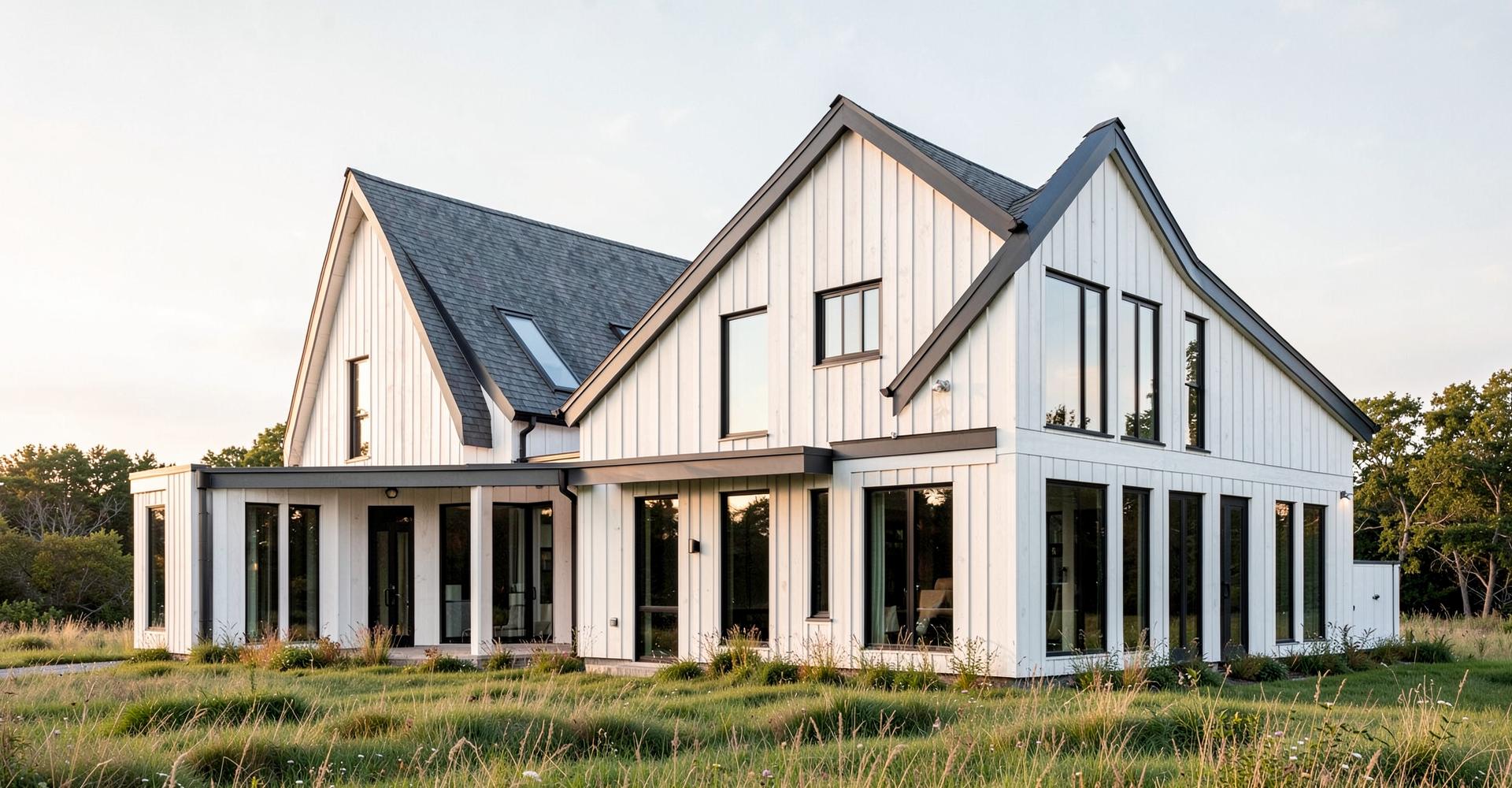
Contemporary New England home built by Northline Builders

Thinking About Your Home? Let's Talk About What's Possible.

Start a Project